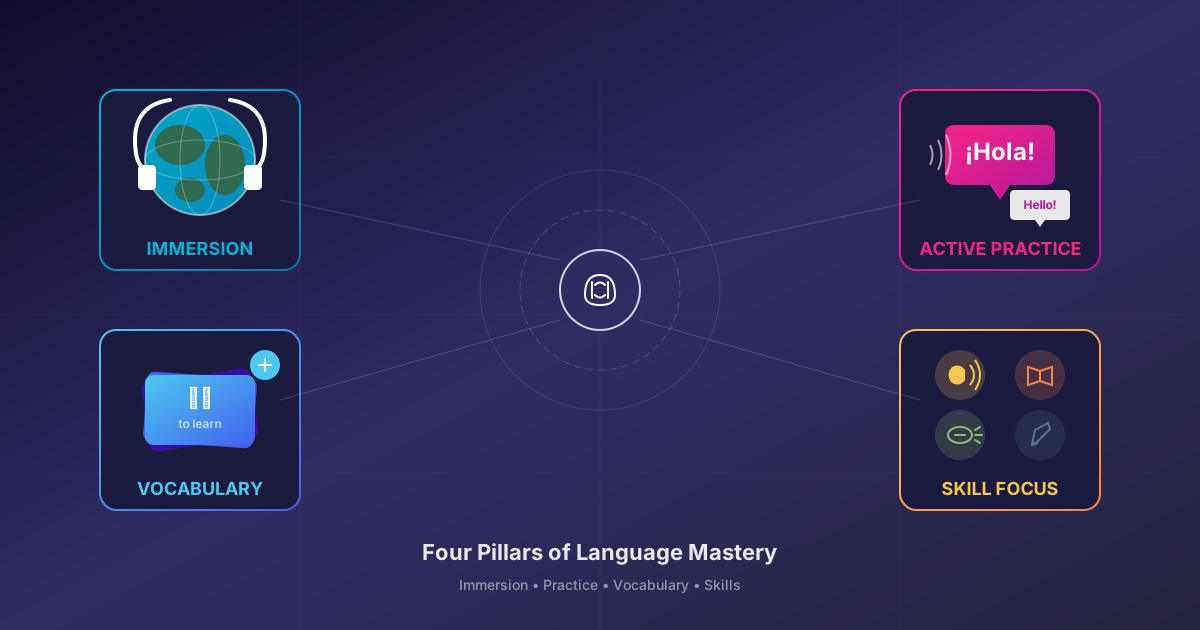
Want to learn a new language but don’t know where to start? You don’t need expensive courses, language schools, or years abroad. What you need are the right methods—proven techniques that polyglots and language researchers agree actually work.
In this guide, you’ll discover the 4 core language learning methods that will help you go from beginner to conversational faster than traditional approaches. Whether you’re learning Spanish, French, Japanese, or any other language, these strategies apply universally.
Quick Summary: The 4 Language Learning Methods
| Method | What It Does | Time Investment |
|---|---|---|
| Immersion | Trains your ear and builds intuition | 30-60 min/day (passive OK) |
| Active Practice | Builds speaking and writing confidence | 15-30 min/day |
| Vocabulary Building | Expands what you can express | 10-15 min/day |
| Skill Focus | Develops listening, reading, speaking, writing | Rotate daily |
Now let’s dive into each method in detail.
1. Immersion: Surround Yourself with the Language
Immersion is the fastest way to learn a new language naturally. It’s how children learn their first language—through constant exposure. The good news? You don’t need to move abroad to create an immersive environment.
Passive Immersion Techniques
Passive immersion works in the background while you do other things:
- Watch TV shows and movies in your target language (start with subtitles, remove them as you improve)
- Listen to podcasts or music during your commute, workouts, or chores
- Read news articles, social media, or books—anything that keeps you engaged
- Change your phone settings to your target language
Active Immersion Techniques
Active immersion requires your full attention but accelerates learning dramatically:
- Find a language partner or native speaker for regular conversations
- Join online communities (Discord servers, Reddit, forums) where the language is spoken
- Watch content without subtitles and try to follow along
- Think in your target language—narrate your thoughts throughout the day
Pro tip: Even 30 minutes of background exposure daily trains your ear to recognize rhythm, intonation, and common patterns. Quantity matters more than perfection.
2. Active Practice: Output Beats Input
Here’s what most language learners get wrong: they spend too much time consuming (listening, reading) and not enough time producing (speaking, writing). Active practice is how you actually become fluent.
Speaking Drills for Language Learners
- Shadowing technique: Repeat exactly what actors or podcast hosts say, matching their rhythm, tone, and pronunciation
- Self-talk practice: Narrate your day, describe objects around you, or rehearse conversations out loud
- Conversation sessions: Book affordable tutors online or join language exchange groups
Writing Practice for Fluency
- Daily journaling: Write just 3 sentences in your target language—what you did, what you’ll do, how you feel
- Social media in your target language: Post comments, tweets, or updates
- Summarize content: After reading an article, write a summary in your own words
Reading Aloud
This simple technique bridges reading and speaking:
- Pick a paragraph from a book or article
- Read it out loud, focusing on pronunciation
- Record yourself and compare with native audio
- Repeat until it sounds natural
Key mindset: Make mistakes early and often. Every error teaches you something. Errors are data, not failures.
3. Vocabulary Building: Learn Phrases, Not Just Words
Single words are hard to remember. Phrases stick because they carry context, meaning, and natural rhythm. This is one of the most effective language learning techniques used by polyglots.
Smart Vocabulary Acquisition
- Learn “I’d like a coffee, please” instead of just “coffee”
- Group vocabulary by themes: travel, work, food, emergencies
- Use new words in sentences immediately—don’t let them sit idle
- Focus on high-frequency words first (the top 1,000 words cover ~80% of daily conversation)
Vocabulary Retention Systems
Build a system that makes review automatic:
- Spaced repetition flashcards: Apps like Anki or custom vocabulary decks automate the review schedule
- Label your environment: Put sticky notes on objects around your home
- Vocabulary notebook: Write words with example sentences and personal associations
How Many Words Should You Learn Per Day?
Limit new vocabulary to 10-20 words per day. Depth beats breadth—it’s better to truly know 15 words than to vaguely recognize 50.
Research shows that knowing just:
- 250 words = basic tourist conversations
- 1,000 words = 80% of everyday speech
- 3,000 words = 95% of everyday speech
4. Skill Focus: Train Each Language Muscle Separately
Language has four distinct skills: listening, reading, speaking, and writing. Each requires dedicated practice. Here’s how to develop each one:
Listening Skills
- Start with slow, clear content (learner podcasts, audiobooks for beginners)
- Gradually increase speed and complexity
- Transcribe short clips to test your comprehension
- Rewatch content—you’ll catch more each time
- Use the workout sessions method for hands-free listening practice
Reading Skills
- Begin with graded readers or children’s books—there’s no shame in starting simple
- Progress to news articles, blogs, and eventually novels
- Read things you genuinely enjoy; engagement beats difficulty level
- Don’t look up every word—guess from context first, then verify
Speaking Skills
- Join conversation groups or hire an affordable online tutor
- Practice with language exchange partners (you teach yours, they teach theirs)
- Talk to yourself when no partner is available—describe your surroundings, plan your day, argue both sides of a debate
- Record yourself and listen back to identify areas for improvement
Writing Skills
- Start with journaling: what you did, what you’ll do, how you feel
- Summarize articles or videos in your own words
- Get feedback from native speakers or AI language tools
- Write emails, comments, or social posts—real stakes improve focus
Putting It All Together: Your Weekly Language Learning Schedule
The best results come from combining all four methods in a balanced routine. Here’s a sample weekly schedule you can adapt:
| Day | Focus | Activity | Time |
|---|---|---|---|
| Mon | Listening | Podcast + transcription exercise | 20 min |
| Tue | Vocabulary | Add 15 new phrases, review flashcards | 15 min |
| Wed | Speaking | Conversation with language partner | 30 min |
| Thu | Reading | Read one article, note 5 new phrases | 20 min |
| Fri | Writing | Journal entry + email in target language | 20 min |
| Sat | Immersion | Watch a movie (no native subtitles) | 90 min |
| Sun | Review | Light flashcard review, replay favorite podcast | 15 min |
Adapt based on your goals:
- Preparing for a trip? → Emphasize speaking and listening
- Taking an exam? → Add more reading and writing
- Just starting out? → Focus on vocabulary and listening first
For a complete daily routine, check out the 10-minute habit playbook.
Frequently Asked Questions
How long does it take to learn a new language?
With consistent daily practice (30-60 minutes), you can reach basic conversational level in 3-6 months for languages similar to your native tongue. More distant languages (like Mandarin or Arabic for English speakers) may take 1-2 years.
What’s the best way to learn a language by yourself?
Self-study works best when you combine immersion (podcasts, shows, music), active practice (speaking aloud, writing), and spaced repetition for vocabulary. The key is consistency—15 minutes daily beats 2 hours once a week.
Can I learn a language without speaking to anyone?
You can build strong listening, reading, and vocabulary skills solo. However, speaking practice with real people accelerates fluency significantly. If you can’t find partners, try language exchange apps, online tutors, or even talking to yourself.
How many words do I need to know to be fluent?
3,000-5,000 words cover 95%+ of everyday conversation in most languages. Focus on high-frequency vocabulary first, then expand based on your interests and needs.
Is immersion really the fastest way to learn?
Immersion accelerates learning, but only when combined with active study. Pure immersion without understanding (like just listening to foreign radio) has limited benefit. The best approach combines immersion with structured practice.
Start Today: Your First Steps
You don’t need the perfect plan. Pick one method, apply it for 15 minutes, and repeat tomorrow. Consistency compounds—small daily efforts lead to massive results over time.
Here’s your action plan for this week:
- ✅ Choose your target language
- ✅ Find one podcast or YouTube channel in that language
- ✅ Learn 10 useful phrases (greetings, basic questions)
- ✅ Practice speaking them out loud for 5 minutes
- ✅ Repeat daily
Related Guides
Continue your language learning journey with these resources:
- Build a custom vocabulary deck — Create personalized flashcards in minutes
- Practice during your commute — Hands-free learning while driving or walking
- The 10-minute habit playbook — Build a sustainable daily routine
- Offline practice guide — Learn without internet access
- Learn while working out — Combine fitness with language learning
Discussion
Click to load comments powered by GitHub Discussions